

A higher electricity bill does not necessarily mean your household is wasting energy. Changes in air-conditioning use, work arrangements, household size, and electricity tariffs can all affect your monthly bill.
If you are researching how to save on your electricity bill in Singapore, start by identifying where your electricity goes, not cutting back indiscriminately. At Energio, we encourage homeowners to understand their consumption patterns before considering longer-term solutions such as residential solar panels. This helps distinguish electricity you can save through better habits from the energy your household genuinely needs.
Saving electricity at home involves three main approaches: reducing unnecessary consumption, improving appliance efficiency, and generating your own electricity. Reducing consumption focuses on everyday habits, such as switching off unused appliances and adjusting air-conditioning settings.
Improving efficiency means using appliances that use less electricity to do the same tasks. Meanwhile, installing residential solar panels allows eligible homeowners to generate electricity on-site, reducing the amount drawn from the grid. Understanding these differences can help you prioritise practical changes based on your household's electricity usage, budget, and long-term energy goals.
Before making changes, compare your electricity consumption in kilowatt-hours (kWh) over several months. For example, if your electricity consumption stays relatively stable but your bill increases, tariff changes may be driving the difference. If consumption rises significantly, investigate what has changed in your household.
Consider whether you have recently installed another air-conditioning unit, purchased a dryer, or started working from home. Reviewing home energy use over time provides a more reliable starting point for identifying avoidable consumption. Where smart meter data is available, comparing daily usage patterns can also reveal when electricity demand is highest.
Air-conditioning is one of the first areas we recommend reviewing because it often accounts for a substantial portion of household electricity consumption, particularly in Singapore's warm climate. For instance, cooling three bedrooms overnight creates a different electricity demand from operating one unit for a few evening hours.
From a practical standpoint, we advise homeowners to distinguish between excessive air-conditioning use and poor cooling performance. To reduce unnecessary electricity use, set your air-conditioner to around 25°C instead of a much lower temperature. Using a ceiling or standing fan alongside air-conditioning can also improve comfort by circulating cool air, so you can keep the thermostat higher. Where possible, cool only occupied rooms and keep doors and windows closed to minimise heat entering the space.
However, if your air-conditioner takes longer than usual to cool a room or struggles to maintain the desired temperature, the issue may involve dirty filters, restricted airflow, or other maintenance-related problems. Addressing these concerns can help the system operate more efficiently without relying solely on changes to your cooling habits.
When looking for ways to save electricity bills in Singapore, prioritise appliances based on their power requirements, operating duration, and frequency of use. A refrigerator runs throughout the day, while dryers and electric water heaters can draw substantial power for shorter periods.
For example, a 2,000-watt water heater running for 30 minutes consumes approximately 1 kWh. If several family members use the heater at different times, repeated heating cycles can contribute noticeably to monthly electricity consumption. Adjusting heating duration or switching off storage heaters when you do not need hot water can reduce unnecessary use.
When replacing appliances, we advise comparing their energy labels, capacity, and estimated electricity consumption. In Singapore, the National Environment Agency's energy labels provide useful information for comparing regulated appliances. A more efficient model may cost more initially but reduce operating expenses over its useful life, particularly for appliances used daily.
Small adjustments can cut electricity use, especially when they become part of your household's daily routine. However, not every energy-saving habit will affect your monthly bill equally.
Simple changes, such as running washing machines with full but not overloaded loads, switching to LED lighting, and turning off unused equipment, can help reduce unnecessary electricity consumption. It is also worth checking standby power consumption, especially for televisions, computers, and other electronic devices that remain plugged in when not in use.
We recommend focusing on appliances and equipment you use most often, as these generally offer more opportunities to save. For example, replacing a light that stays on for several hours daily may have a greater impact than unplugging a rarely used device. The key is to prioritise changes that make a noticeable difference without disrupting your household's daily routine.
One frequently overlooked way to save on your electricity bill in Singapore is to recognise that your household's electricity needs may have changed permanently. For example, a landed homeowner who starts working from home may use air-conditioning, computers, and kitchen appliances throughout the day, resulting in higher electricity demand.
We recommend distinguishing between temporary increases in electricity consumption and changes that are likely to become part of your household's regular energy needs. For example, working from home may increase daytime electricity use through longer air-conditioning hours, computer equipment, and other appliances.
If working from home has become a permanent arrangement, your daytime electricity consumption may remain higher than before. Rather than treating all additional usage as waste, we recommend identifying which activities are necessary and which can be made more efficient. This also helps determine whether longer-term solutions, including solar energy, are financially suitable.
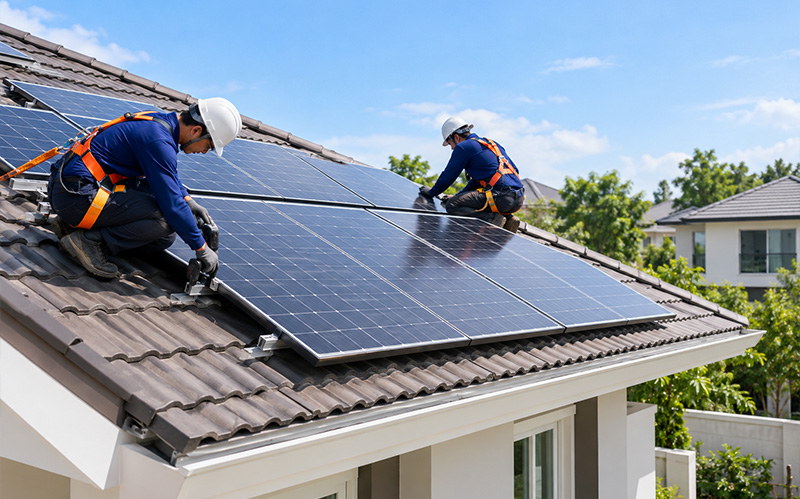
If there is enough roof space, a solar panel system for homes can provide another way to manage electricity costs. Solar panels generate electricity during daylight hours, allowing households to use some of that electricity directly instead of purchasing it from the grid.
However, not every roof delivers the same solar potential. At Energio, we assess your property's physical conditions alongside your household's electricity needs. This includes evaluating usable roof space, roof orientation, potential shading from nearby buildings or trees, and your daytime electricity consumption.
For example, a landed property with a large, unobstructed roof may accommodate more solar panels and generate more electricity than a similar-sized home with limited usable roof space or significant shading. However, even with favourable roof conditions, the homeowner's electricity consumption patterns can affect the financial suitability of a larger system. Our approach considers usable installation area, expected solar generation, and potential electricity bill savings to recommend a suitable system.
Learning how to save on your electricity bill in Singapore starts with understanding your household's consumption patterns and identifying unnecessary electricity use. Adjusting air-conditioning habits, choosing energy-efficient appliances, and making practical changes to daily routines can help manage electricity costs over time.
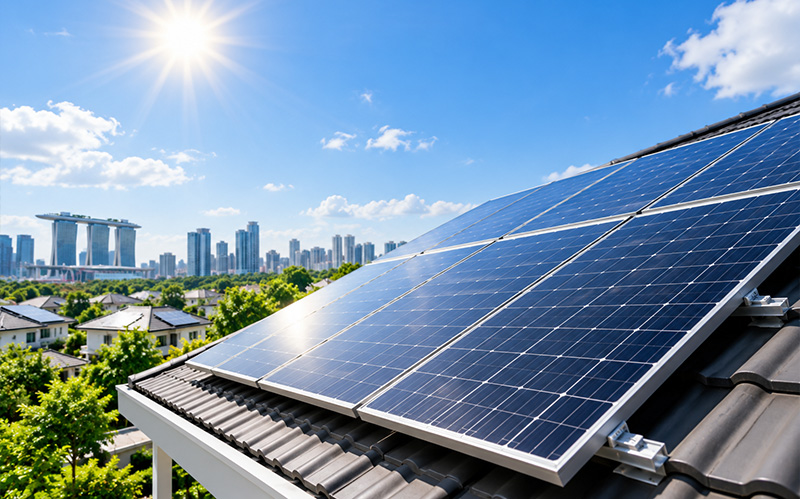
For homeowners looking beyond everyday conservation, solar energy offers another way to reduce reliance on grid electricity. A reliable solar panel company can help you assess whether your landed property is suitable for solar panel installation and how a system could support your household's long-term electricity needs.
Energio is a Singapore-based provider of Solar PV integration and EV charging solutions for residential and commercial properties. Our services cover site assessments, system design, installation, regulatory submissions, monitoring, and after-sales assistance. We help homeowners make informed decisions about renewable energy by considering their property's characteristics and long-term electricity needs.
Contact us to explore a suitable Solar PV solution for your electricity needs.
Yes. Some appliances continue drawing electricity while on standby. Switching off unused equipment can reduce this consumption, but savings depend on the appliance and how often it stays connected.
Yes, potentially. Excess solar electricity may be exported to the grid under applicable arrangements. However, the financial benefit depends on export compensation, system generation, and household consumption.
Roof suitability depends on structural integrity, available space, shading, orientation, and installation requirements. A professional site assessment helps determine feasible system capacity and expected electricity generation.


