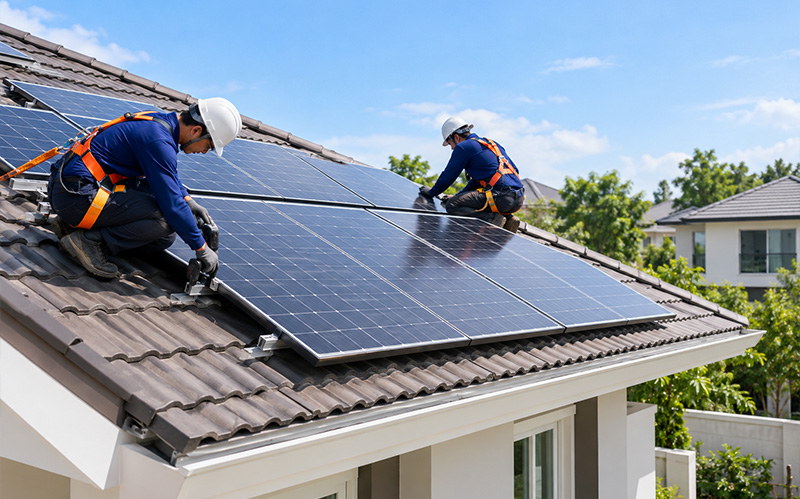
Solar panels operate outdoors for decades, making exposure to dust, leaves, bird droppings, and airborne particles unavoidable. Over time, accumulated debris can obstruct sunlight and affect electricity generation, but not every solar PV system requires the same cleaning frequency.
A residential rooftop surrounded by trees may experience different contamination from a commercial installation near industrial activity. Even panels within the same array can accumulate dirt unevenly.
At Energio, we assess panel condition alongside generation data before recommending solar panel cleaning. Our priority is to establish whether contamination is genuinely affecting output or whether another system issue requires attention.
Our assessment considers the installation environment, visible contamination, and changes in generation patterns. For example, comparing current electricity generation with historical output can help identify unusual declines in performance.
Meanwhile, inverter alerts, where monitoring is available, may indicate potential system issues that warrant further investigation. These insights can help determine whether cleaning is likely to improve performance or whether additional technical assessment is needed.
The surrounding environment influences how quickly solar panels accumulate dirt and debris. Landed properties near trees may be more exposed to fallen leaves and bird droppings, while commercial and industrial rooftops may experience greater accumulation of airborne dust and particulates.
Although Singapore's frequent rainfall can help rinse away loose dust and surface dirt, stubborn deposits such as bird droppings and debris trapped around panel edges may remain. We assess the actual condition of the panels, considering their surroundings and the extent of contamination, to determine whether cleaning is necessary.
The impact of dirt and debris on solar panels depends on what has accumulated and where it is located. A light layer of dust across the array may have a different effect from bird droppings or leaves that obstruct specific sections of a panel.
For instance, panels beneath overhanging trees may collect debris more frequently, while those further away remain relatively clean. During our assessment, we look for these differences to identify areas where contamination could be reducing sunlight exposure.
Beyond inspecting the panels, we review generation data to determine whether accumulated dirt and debris are affecting system performance. A gradual decline in output alongside increasing contamination may suggest that cleaning is necessary.
However, lower generation does not always mean dirty panels. Cloudy or rainy weather can temporarily reduce sunlight exposure, causing normal output fluctuations. Through performance monitoring, we compare generation trends under similar weather and operating conditions to identify unusual changes. If output continues to decline despite comparable sunlight exposure, we investigate whether soiling or other system issues could be responsible.
Dirty panels are only one possible explanation for reduced solar output.
Other causes include:
New shading from trees or surrounding structures
Inverter faults or abnormal operating conditions
Loose or damaged electrical connections
Physical damage to modules or other components
When the evidence does not clearly indicate contamination, system troubleshooting may be more appropriate than cleaning. This prevents unnecessary maintenance and helps focus on the actual cause of reduced performance.
Solar panel cleaning removes surface contamination, but it does not assess the condition of the entire PV installation. A visually clean array can still experience reduced output because of inverter problems, wiring issues, or other electrical faults. Similarly, an array with visible dirt may continue generating within its expected performance range.
An improvement in solar generation after cleaning, under comparable weather conditions, suggests that accumulated dirt and debris may have contributed to the earlier performance loss. If output remains unusually low, we investigate other possible causes by reviewing historical generation trends, inverter fault alerts, and shading changes.
For example, a sudden system-wide decline could indicate an inverter or electrical fault, while reduced output from a particular section of the array may point to localised shading or module-related issues. Our approach to solar panel repair and maintenance focuses on identifying the root cause before recommending corrective action, ensuring that maintenance efforts address actual performance concerns.
Keeping a solar PV system in good working condition requires attention to both panel cleanliness and overall system performance. As part of our solar panel maintenance services, we monitor generation trends, identify potential faults, and assess whether cleaning, technical inspections, or repairs are necessary to maintain reliable operation.
When cleaning is necessary, we also prioritise safe access and proper cleaning techniques to prevent damage to the panels. Walking directly on modules or using abrasive materials can damage their surfaces, while working on wet or sloped rooftops increases the risk of falls. To address these risks, we recommend engaging trained personnel who follow manufacturer-approved cleaning methods and use appropriate equipment and fall-protection measures.
Although solar panels require relatively little maintenance, periodic inspections and proper upkeep are important for reliable long-term performance. Solar panel cleaning can restore generation when dirt and debris block sunlight, but cleaning without a clear need may offer limited benefits.
Choosing a reliable solar panel service provider in Singapore is equally important. Making informed maintenance decisions helps property owners avoid unnecessary servicing costs, address potential problems before they worsen, and support reliable solar energy generation over the system's lifespan.
At Energio, we provide solar PV integration and EV charging solutions for residential and commercial properties in Singapore. Our services cover site assessments, system design, installation, regulatory coordination, monitoring, warranty support, and after-sales assistance.
Contact us to discuss your requirements and explore suitable maintenance and support options.
There is no universal cleaning interval suitable for every installation. Frequency depends on surrounding vegetation, airborne dust, bird activity, roof conditions, and observed performance. Regular inspections and generation monitoring can help determine when cleaning is justified.
Rain can wash away loose dust and some surface dirt, reducing contamination on exposed panels. However, stubborn bird droppings, leaves, and adhered deposits may remain. Rainfall should not replace inspections when visible debris or unexplained performance changes occur.
Yes, substantial or concentrated contamination can reduce the sunlight reaching solar cells and affect output. However, the extent of the loss depends on the type, severity, and location of the soiling. Comparing generation data under similar conditions helps establish whether cleaning is likely to improve performance.