With electricity prices rising and sustainability becoming a priority, more homeowners are asking a simple question:
How does a Solar PV System work and does it actually make sense in Singapore?
This guide explains how Solar energy works for residential homes in Singapore, step by step, in clear and digestible terms.
If you’re looking for deeper dives into solar costs, savings, or selling excess electricity back to the grid, you’ll find links throughout this guide to explore those topics in more detail.
Solar energy is electricity generated from sunlight.
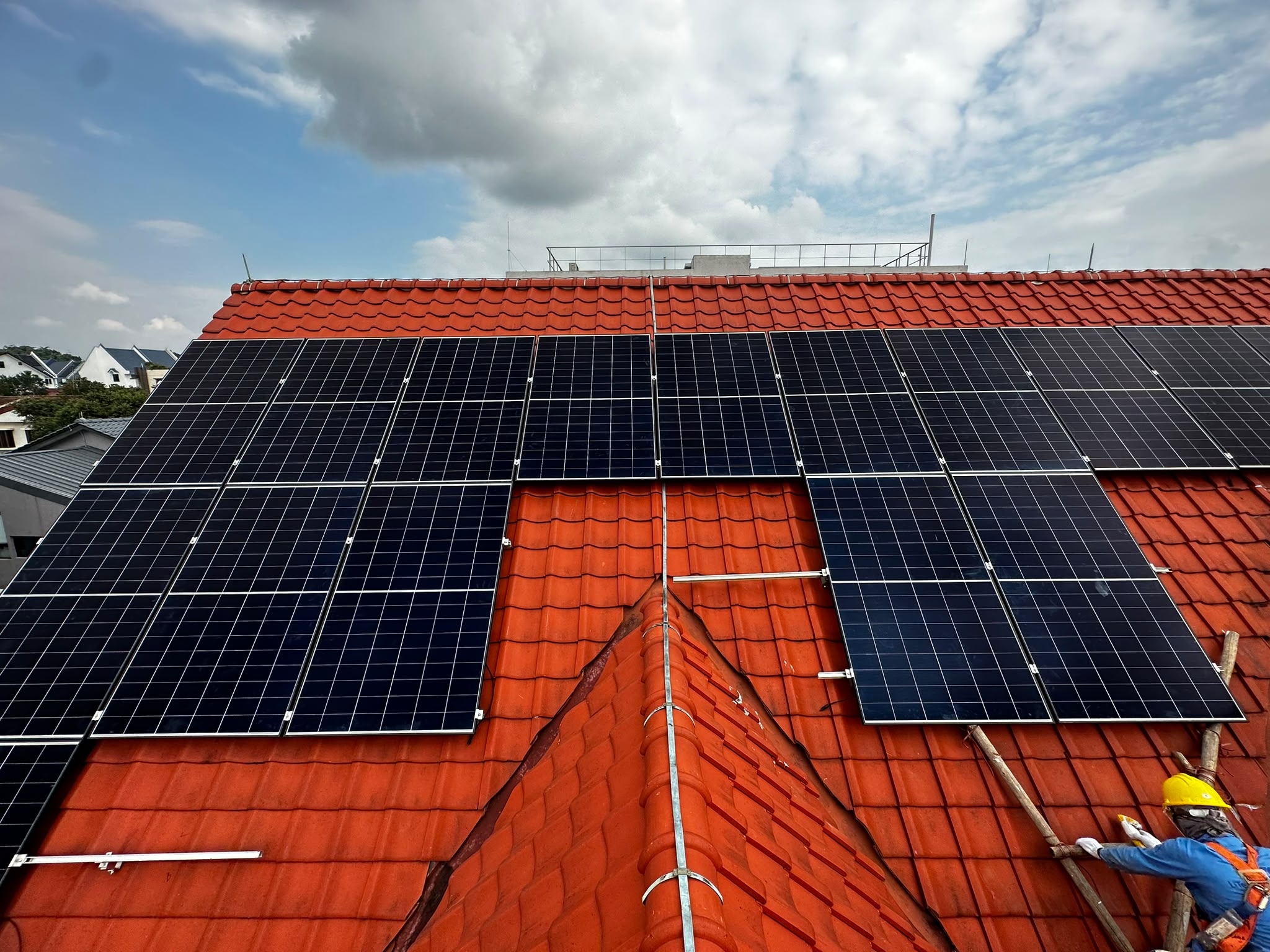
Solar panels contain photovoltaic (PV) cells. When sunlight hits these cells, it creates an electrical current through a process known as the photovoltaic (PV) effect. This electricity is then converted into usable power for your home.
In simple terms:
Sunlight → Solar Panels → Electricity → Power Your Home
Because Singapore is located near the equator, we receive consistent sunlight year-round, making Solar particularly suitable for residential homes.
A typical residential Solar PV System consists of 4 main components:
Solar energy will be prioritised and used automatically.
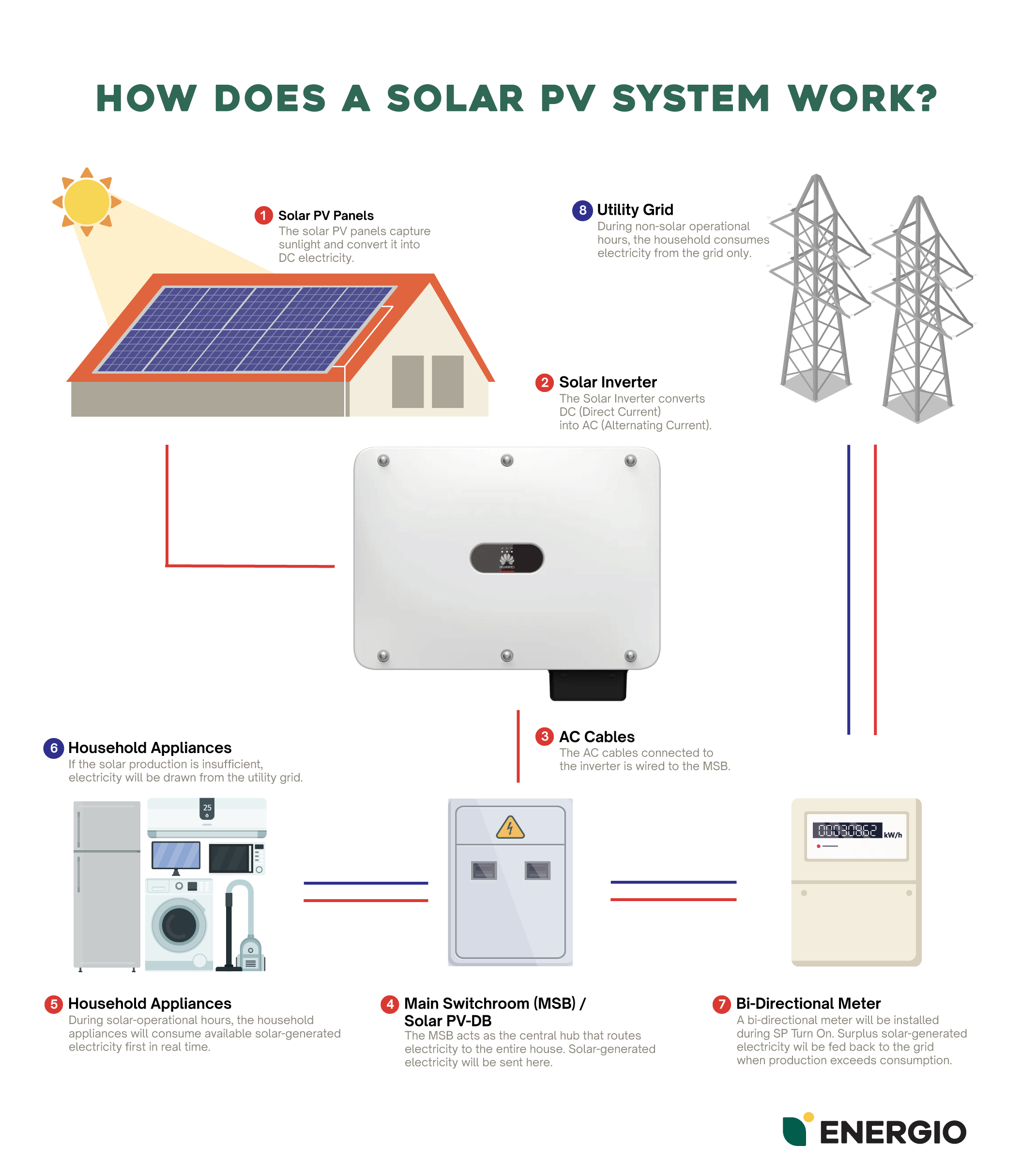
During the day,
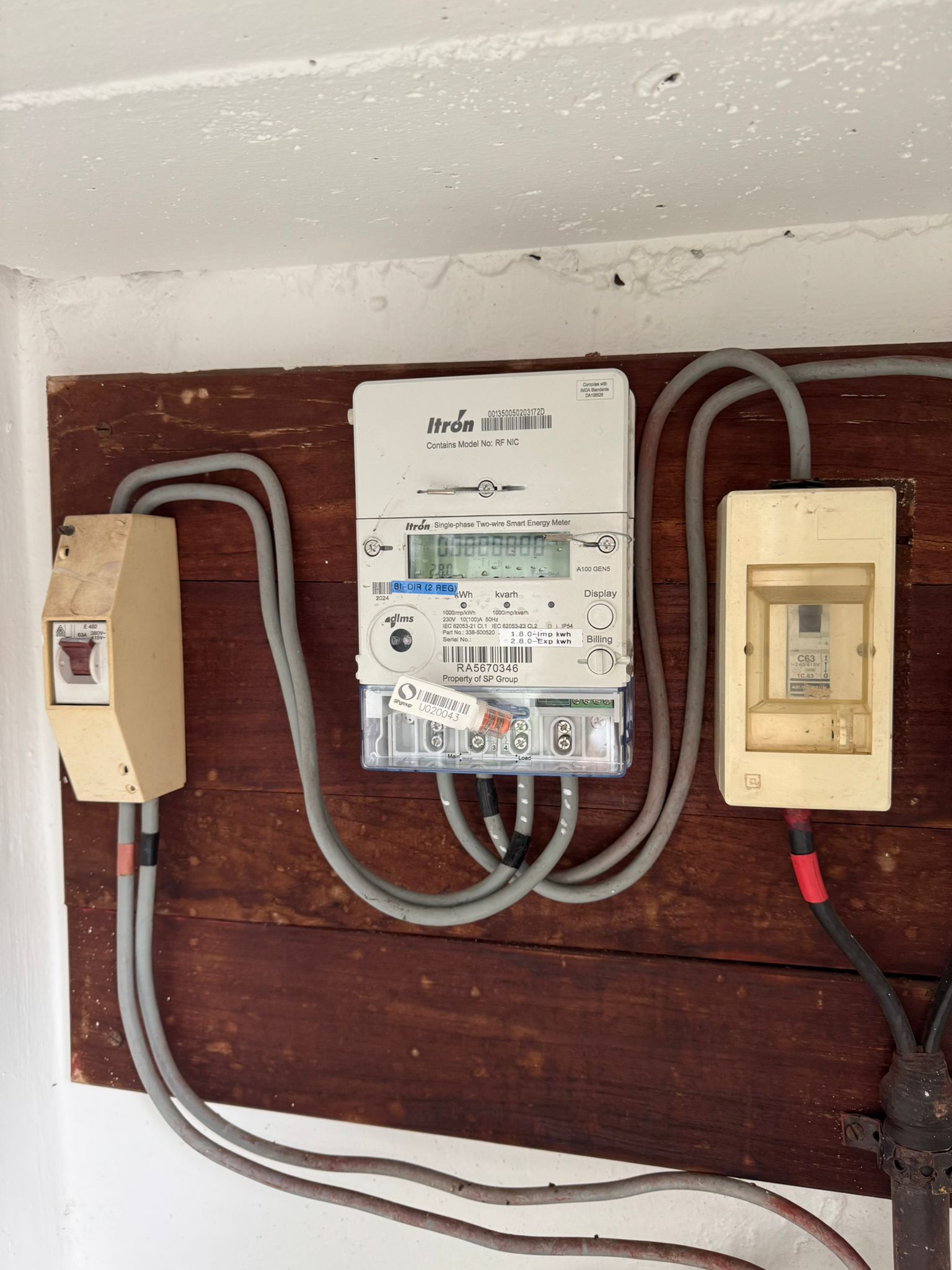
No manual switching is required. The process is automatic and seamless via a bi-directional meter, which replaces your existing meter upon system turn-on.
If your system generates more electricity than your home consumes, the excess is sold to the SP grid.
In Singapore, there is no fixed feed-in tariff. Instead, the rate at which excess solar electricity is credited depends on whether your electricity account is supplied by SP Group (non contestable) or a third-party retailer (contestable). Export rates are typically lower than retail electricity prices.
Because of this, most residential systems are designed to offset daytime consumption directly. Any excess electricity exported is credited back as rebates, helping to offset nighttime electricity bills and overall utility costs.
👉 Want to understand how selling excess solar electricity works and whether it’s worth it?
Read: How Solar Exports and Sell-Back Works in Singapore
Yes — solar panels still generate electricity under cloudy conditions, but at a reduced output.
This is why we calculate Peak Sun Hours (PSH) using an annual average, which accounts for:
Overall, Singapore’s solar conditions remain reliable on an annual basis.
Electricity generation largely depends on a few factors such as:
As a general reference:
1 kWp produces about 1,000-1,300kWh per year in Singapore. Most landed home install 5-20kWp systems, which typically costs range from $10,000 to $35,000, depending on system size and equipment.
Homes with higher daytime usage, such as EV charging, home offices, or swimming pools, benefit the most, as they directly consume solar energy and reduce electricity purchases from the grid (saving approximately $0.28/kWh during the day).
For most homeowners, battery storage is optional.
Batteries can increase upfront system costs by 2-3 times. Given Singapore’s stable electricity grid and low outage risk, batteries are not essential for most households.
However, many homeowners choose to install:
This allows battery storage to be added later if prices fall or energy needs change.
Yes! Solar systems are among the safest electrical installations in a home when designed and installed properly.
International fire safety data from mature solar markets such as Australia, the UK, and Germany shows that less than 0.1% of residential fire incidents are associated with solar PV systems. By comparison, everyday household appliances, such as electric cookers, gas stoves, clothes dryers, and extension cords, are among the leading causes of home fires worldwide.
Modern solar systems include multiple safety layers, including automatic shutdown protection, fault detection, and fire-rated cabling. In Singapore, all installations must comply with EMA regulations, SP Group grid requirements, and be endorsed by a Licensed Electrical Worker (LEW).
In practical terms, a properly installed solar system carries a significantly lower fire risk than common household appliances, while operating quietly and automatically in the background.
Understanding how a solar system works helps homeowners make informed decisions without pressure or confusion.
Solar is not a one-size-fits-all solution. The right system depends on your roof, lifestyle, and energy usage. A properly designed system focuses on efficiency, safety, and realistic expectations -- not exaggerated savings claims.
Book a free consultation with Energio and discover how much you could save with solar.
With electricity prices rising and sustainability becoming a priority, more homeowners are asking a simple question:
How does a Solar PV System work and does it actually make sense in Singapore?
This guide explains how Solar energy works for residential homes in Singapore, step by step, in clear and digestible terms.
If you’re looking for deeper dives into solar costs, savings, or selling excess electricity back to the grid, you’ll find links throughout this guide to explore those topics in more detail.
Solar energy is electricity generated from sunlight.
Solar panels contain photovoltaic (PV) cells. When sunlight hits these cells, it creates an electrical current through a process known as the photovoltaic (PV) effect. This electricity is then converted into usable power for your home.
In simple terms:
Sunlight → Solar Panels → Electricity → Power Your Home
Because Singapore is located near the equator, we receive consistent sunlight year-round, making Solar particularly suitable for residential homes.
A typical residential Solar PV System consists of 4 main components:
Solar energy will be prioritised and used automatically.
During the day,
No manual switching is required. The process is automatic and seamless via a bi-directional meter, which replaces your existing meter upon system turn-on.
If your system generates more electricity than your home consumes, the excess is sold to the SP grid.
In Singapore, there is no fixed feed-in tariff. Instead, the rate at which excess solar electricity is credited depends on whether your electricity account is supplied by SP Group (non contestable) or a third-party retailer (contestable). Export rates are typically lower than retail electricity prices.
Because of this, most residential systems are designed to offset daytime consumption directly. Any excess electricity exported is credited back as rebates, helping to offset nighttime electricity bills and overall utility costs.
👉 Want to understand how selling excess solar electricity works and whether it’s worth it?
Read: How Solar Exports and Sell-Back Works in Singapore
Yes — solar panels still generate electricity under cloudy conditions, but at a reduced output.
This is why we calculate Peak Sun Hours (PSH) using an annual average, which accounts for:
Overall, Singapore’s solar conditions remain reliable on an annual basis.
Electricity generation largely depends on a few factors such as:
As a general reference:
1 kWp produces about 1,000-1,300kWh per year in Singapore. Most landed home install 5-20kWp systems, which typically costs range from $10,000 to $35,000, depending on system size and equipment.
Homes with higher daytime usage, such as EV charging, home offices, or swimming pools, benefit the most, as they directly consume solar energy and reduce electricity purchases from the grid (saving approximately $0.28/kWh during the day).
For most homeowners, battery storage is optional.
Batteries can increase upfront system costs by 2-3 times. Given Singapore’s stable electricity grid and low outage risk, batteries are not essential for most households.
However, many homeowners choose to install:
This allows battery storage to be added later if prices fall or energy needs change.
Yes! Solar systems are among the safest electrical installations in a home when designed and installed properly.
International fire safety data from mature solar markets such as Australia, the UK, and Germany shows that less than 0.1% of residential fire incidents are associated with solar PV systems. By comparison, everyday household appliances, such as electric cookers, gas stoves, clothes dryers, and extension cords, are among the leading causes of home fires worldwide.
Modern solar systems include multiple safety layers, including automatic shutdown protection, fault detection, and fire-rated cabling. In Singapore, all installations must comply with EMA regulations, SP Group grid requirements, and be endorsed by a Licensed Electrical Worker (LEW).
In practical terms, a properly installed solar system carries a significantly lower fire risk than common household appliances, while operating quietly and automatically in the background.
Understanding how a solar system works helps homeowners make informed decisions without pressure or confusion.
Solar is not a one-size-fits-all solution. The right system depends on your roof, lifestyle, and energy usage. A properly designed system focuses on efficiency, safety, and realistic expectations -- not exaggerated savings claims.
Book a free consultation with Energio and discover how much you could save with solar.