If you’re researching solar panel installation in Singapore, you’ve probably noticed rising electricity bills and increasing interest in renewable energy. In 2025, solar has become one of the most cost-effective ways to reduce your electrical bill, hedge against tariff increases, and lock in long-term energy savings.
Here’s why solar returns are improving in Singapore and what homeowners need to know before getting started.
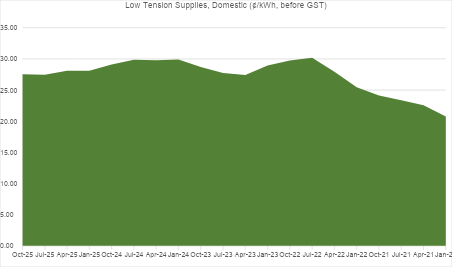
Based on Singapore’s tariff data, household electricity prices have risen steadily from ~21¢/kWh in 2021 to 28–30¢/kWh in most of 2023–2025. Even when global fuel prices eased, tariffs stayed high, suggesting a structural upward shift rather than a temporary spike. With this trend, more homeowners are exploring solar as a way to gain control over their long-term energy costs.
As search interest grows around terms like “how to reduce Singapore electricity bill”, “SP tariff 2025”, and “is solar energy worth it”, more homeowners are turning to solar as a practical solution. Solar provides a long-term, fixed-cost source of electricity for 25+ years, offering protection against rising tariffs.
Thanks to global manufacturing efficiencies, solar panel system prices in Singapore have fallen by 10–15% since 2022, making it more affordable for homeowners to go solar. BNEF reports that global module prices fell by 25–35% from 2022 to 2024, driven by oversupply from Chinese manufacturers and falling polysilicon prices. At the same time, panel technology has advanced rapidly, especially with the introduction of high-efficiency N-type TOPCon modules and all-back-contact (ABC) panels. Modern residential solar panels now typically reach 460–490 Wp, compared to older systems in the 200-300 Wp range, allowing homes to generate more energy from the same roof space.
For homeowners evaluating the solar payback period in Singapore, these improvements matter. Higher panel efficiency and lower system costs translate into greater productivity, faster payback, and stronger long-term returns. Today, most landed properties achieve a 3-6-year payback period, depending on roof size and electricity consumption patterns. This is a major improvement from just a few years ago, when solar payback periods commonly ranged from 7-10 years.
For homeowners on the SP regulated tariff (non-contestable consumers), excess solar energy exported to the grid is credited at SP’s purchase tariff minus grid charges. This typically works out to around $0.22/kWh, which is significantly higher than the USEP wholesale rates received by contestable consumers on retailer plans (usually $0.10–$0.12/kWh).
When your solar system produces more than your home consumes, the surplus is automatically sold back to the grid and credited against other items on your utility bill — including night-time electricity usage, water charges, and refuse fees. This higher sellback rate allows SP-tariff households to recover their solar investment faster, improving overall ROI.
Search interest for solar has surged in Singapore, with Google Trends showing strong growth for keywords such as “solar cost Singapore”, “best solar installer Singapore”, and “solar panels for landed property”. This reflects a shift in how homeowners view solar: no longer just as an environmental upgrade, but as a financial investment with measurable returns.
According to the Energy Market Authority (EMA), over 5,000 residential households in Singapore have already installed solar panels, and the number continues to rise each year. As awareness grows and more homeowners share their savings and payback periods, demand for residential solar systems is expected to accelerate further.
With tariffs rising and solar prices falling, 2025 offers the strongest financial case for going solar in the last decade.
Book a free consultation with Energio and discover how much you could save with solar.
If you’re researching solar panel installation in Singapore, you’ve probably noticed rising electricity bills and increasing interest in renewable energy. In 2025, solar has become one of the most cost-effective ways to reduce your electrical bill, hedge against tariff increases, and lock in long-term energy savings.
Here’s why solar returns are improving in Singapore and what homeowners need to know before getting started.
Based on Singapore’s tariff data, household electricity prices have risen steadily from ~21¢/kWh in 2021 to 28–30¢/kWh in most of 2023–2025. Even when global fuel prices eased, tariffs stayed high, suggesting a structural upward shift rather than a temporary spike. With this trend, more homeowners are exploring solar as a way to gain control over their long-term energy costs.
As search interest grows around terms like “how to reduce Singapore electricity bill”, “SP tariff 2025”, and “is solar energy worth it”, more homeowners are turning to solar as a practical solution. Solar provides a long-term, fixed-cost source of electricity for 25+ years, offering protection against rising tariffs.
Thanks to global manufacturing efficiencies, solar panel system prices in Singapore have fallen by 10–15% since 2022, making it more affordable for homeowners to go solar. BNEF reports that global module prices fell by 25–35% from 2022 to 2024, driven by oversupply from Chinese manufacturers and falling polysilicon prices. At the same time, panel technology has advanced rapidly, especially with the introduction of high-efficiency N-type TOPCon modules and all-back-contact (ABC) panels. Modern residential solar panels now typically reach 460–490 Wp, compared to older systems in the 200-300 Wp range, allowing homes to generate more energy from the same roof space.
For homeowners evaluating the solar payback period in Singapore, these improvements matter. Higher panel efficiency and lower system costs translate into greater productivity, faster payback, and stronger long-term returns. Today, most landed properties achieve a 3-6-year payback period, depending on roof size and electricity consumption patterns. This is a major improvement from just a few years ago, when solar payback periods commonly ranged from 7-10 years.
For homeowners on the SP regulated tariff (non-contestable consumers), excess solar energy exported to the grid is credited at SP’s purchase tariff minus grid charges. This typically works out to around $0.22/kWh, which is significantly higher than the USEP wholesale rates received by contestable consumers on retailer plans (usually $0.10–$0.12/kWh).
When your solar system produces more than your home consumes, the surplus is automatically sold back to the grid and credited against other items on your utility bill — including night-time electricity usage, water charges, and refuse fees. This higher sellback rate allows SP-tariff households to recover their solar investment faster, improving overall ROI.
Search interest for solar has surged in Singapore, with Google Trends showing strong growth for keywords such as “solar cost Singapore”, “best solar installer Singapore”, and “solar panels for landed property”. This reflects a shift in how homeowners view solar: no longer just as an environmental upgrade, but as a financial investment with measurable returns.
According to the Energy Market Authority (EMA), over 5,000 residential households in Singapore have already installed solar panels, and the number continues to rise each year. As awareness grows and more homeowners share their savings and payback periods, demand for residential solar systems is expected to accelerate further.
With tariffs rising and solar prices falling, 2025 offers the strongest financial case for going solar in the last decade.
Book a free consultation with Energio and discover how much you could save with solar.