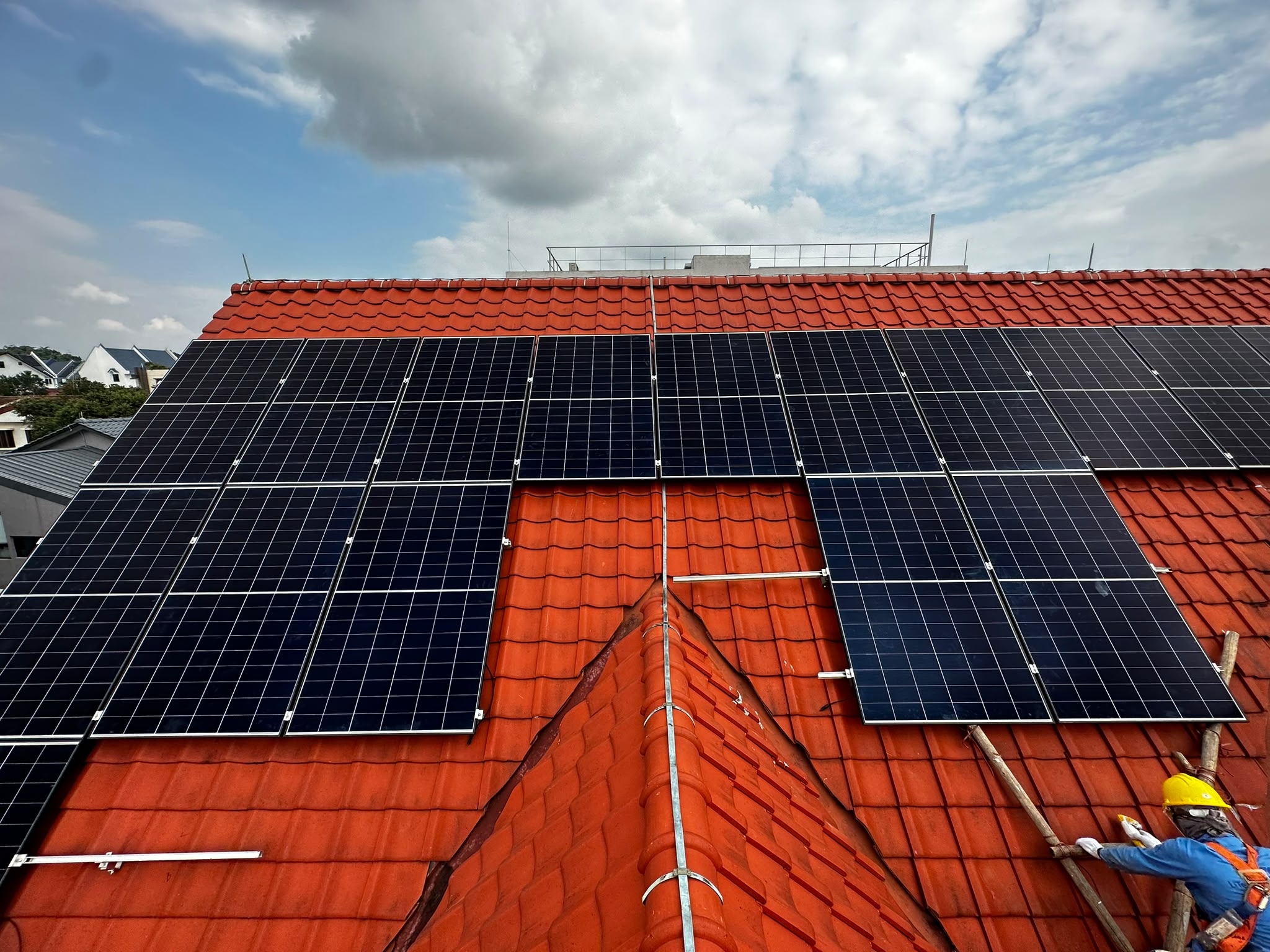
Switching to solar energy in Singapore does more than just reducing electricity bills. Excess electricity generated by your system can be exported back to the grid and compensated through bill credits, depending on your electricity arrangement.
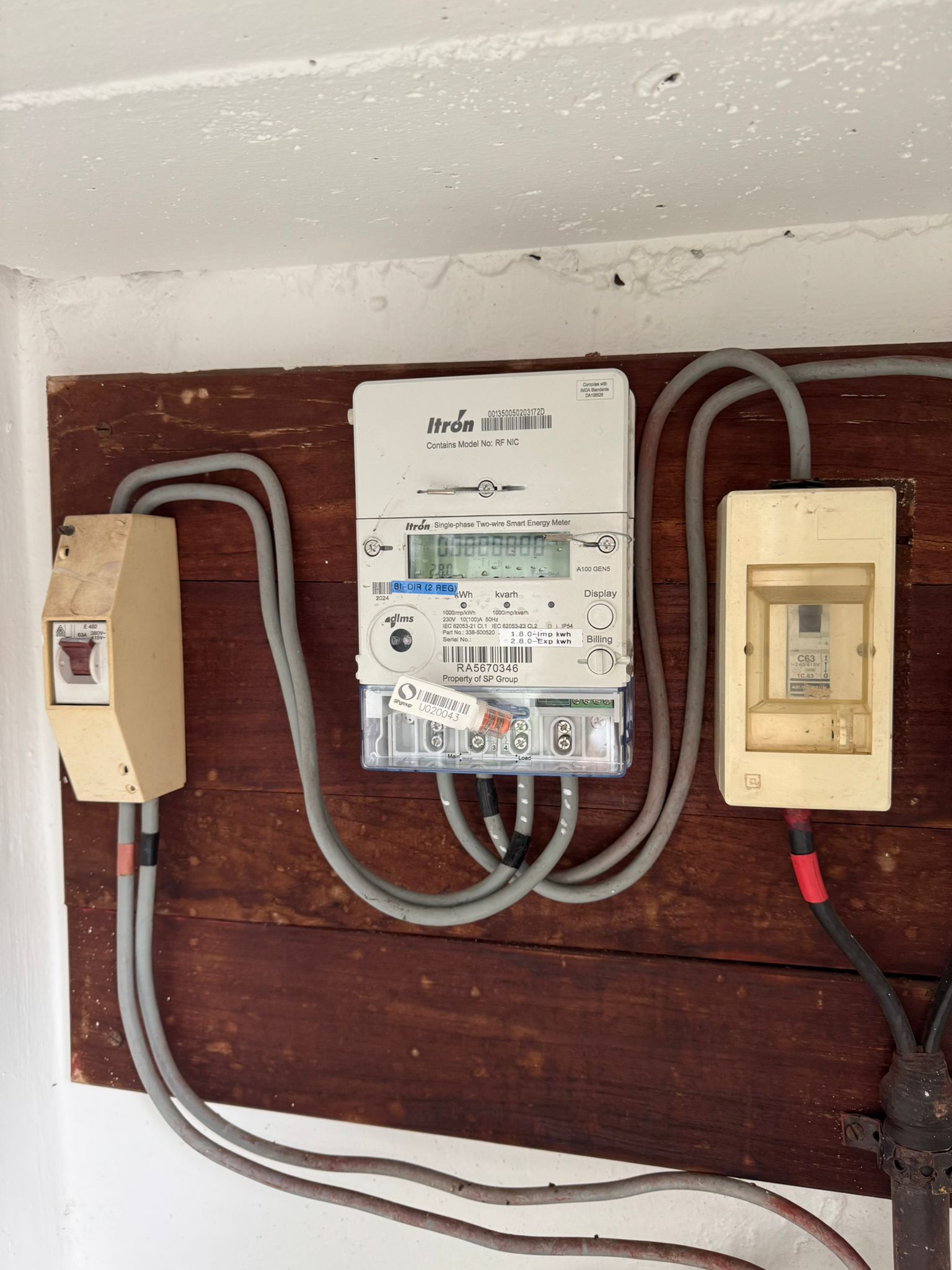
In a typical solar system without battery storage, solar electricity is first used by your home or building. Any excess electricity not consumed instantly is exported to Singapore’s national power grid. The exported electricity is then measured using a bi-directional meter. Depending on your billing arrangement, your rebates values and arrangement differs accordingly.
Solar energy produced by consumers is first offset against on-site consumption, and any excess electricity exported to the grid can be paid for.
Your compensation depends on who you buy electricity from.
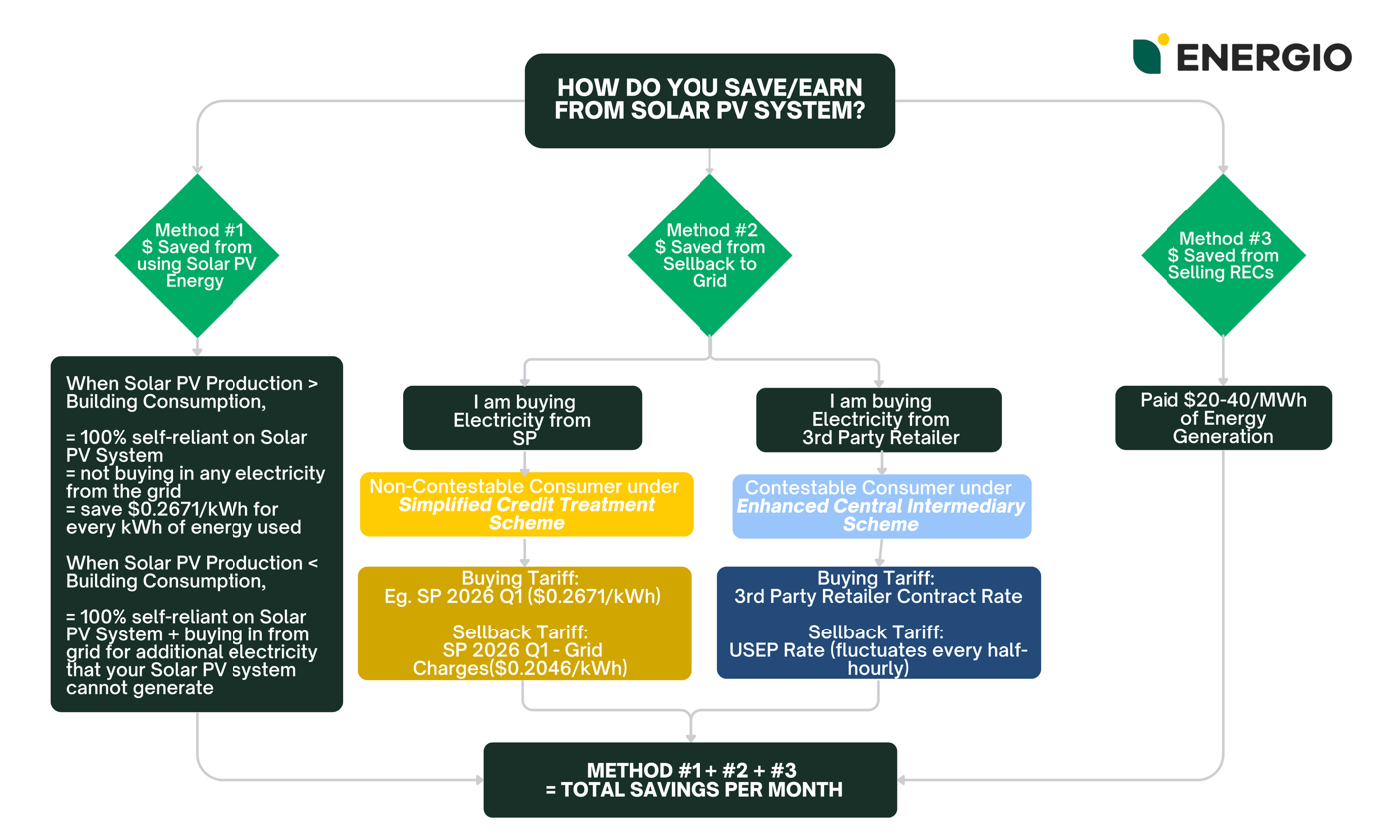
If you are buying electricity from SP and is installing a solar PV system smaller than 1MWac, you will be a non-contestable consumer under the Simplified Credit Treatment (SCT) scheme, which offers predictable credits based on quarterly SP Group rates and is ideal for residential users.
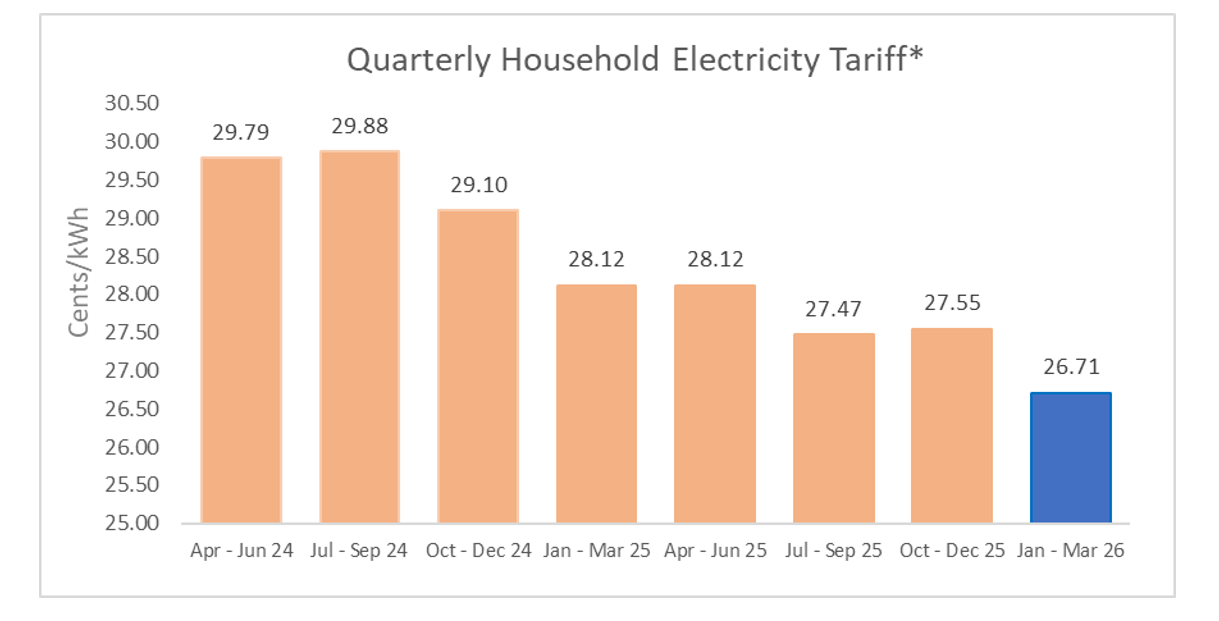
Exported electricity is credited at the prevailing low-tension regulated tariff minus grid charges (approximately 6 cents per kWh). The export rate is reviewed quarterly and moves broadly in line with the quarterly electricity tariff, after deducting grid charges. Credits will appear as an offset on your monthly electricity bill, as shown in the example below.
On your SP bill, the “Export of Electricity” section shows the credits earned from exporting excess solar energy back to the grid. In this example, the homeowner exported 3,231 kWh of electricity at a rate of $0.2122–$0.2130 per kWh. These export credits are then used to offset other billable items on the SP bill directly, such as electricity imports, water charges, and refuse removal services. In essence, SCT scheme provides a stable credit rebate system in 1 concise bill, and is ideal for those who prefer regulated and predictable monthly savings, without the volatility of a market-based pricing.
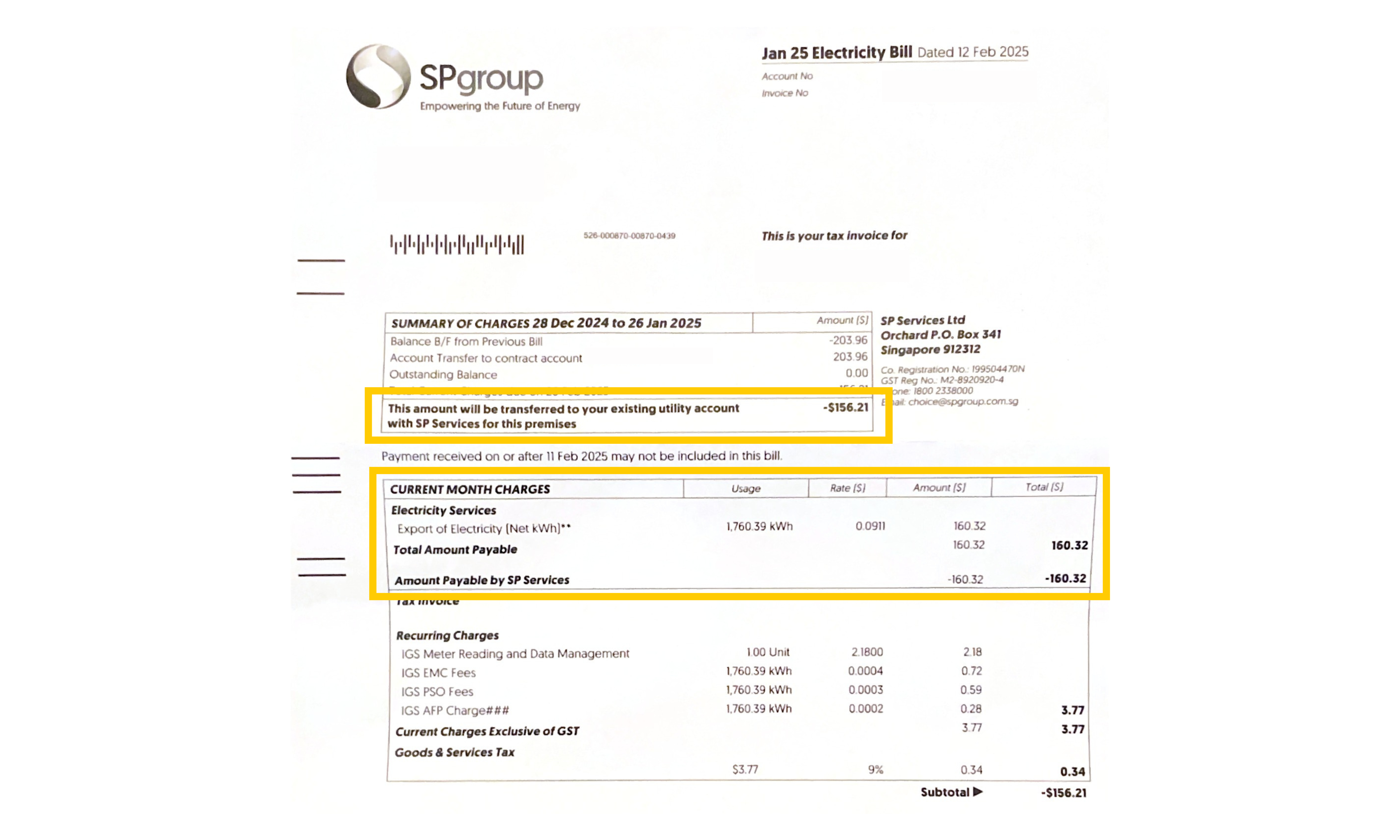
If you are buying electricity from a 3rd party/Open Electricity Market (OEM) retailer and installing a solar PV system smaller than 10 MWac, you will be a contestable consumer under the Enhanced Central Intermediary Scheme (ECIS). Credits are based on the fluctuating wholesale Uniform Singapore Energy Price (USEP), offering variable and potentially higher or lower earnings depending on the period.
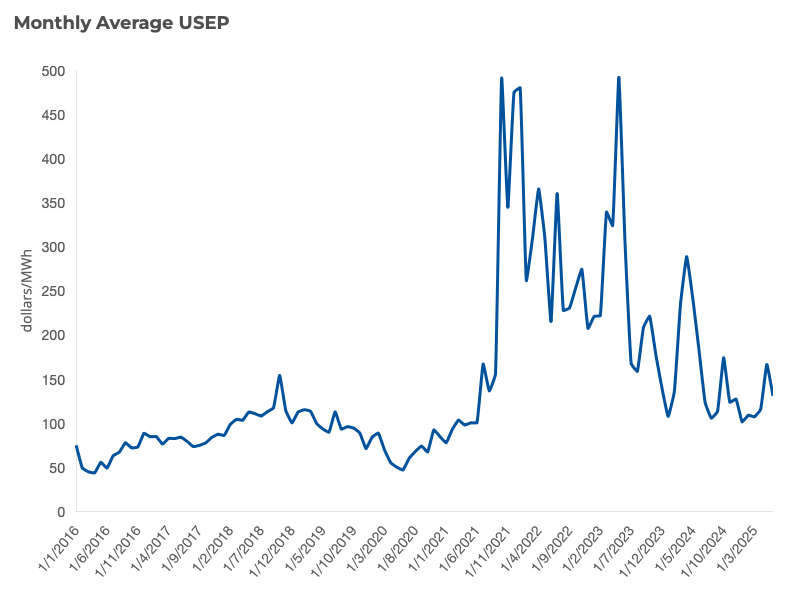
USEP prices have largely stabilised in the $100 to $200/MWh range in 2025, signalling an end to the high volatility observed between 2021 and 2023. As a result, even during periods of higher demand, the potential range of energy cost savings is narrower and is likely to average closer to the low $100/MWh range over time.
Compared to SP Group’s solar export (sell-back) rates, there has been an increasing trend of USEP prices falling below SP’s export rates, which can reduce export revenues and lengthen the overall return on investment (ROI) or payback period for solar system owners.
That said, we generally recommend homeowners remain on an OEM electricity contract only if:
The billing system of these rebates are separated from your OEM bills, meaning you will receive these bills on a monthly basis:
The credits will be transferred to your existing utility account with SP services to offset your other billable items on the SP bill, such as water charges and refuse removal services.
For most homes and commercial buildings, exporting excess solar electricity is a secondary benefit that helps shorten the overall payback period - it is not the primary reason to install solar.
The largest savings typically come from self-consumption. Every unit of solar electricity you use directly is a unit you do not need to purchase from the grid at prevailing retail or regulated tariffs (currently around $0.2671/kWh). In comparison, electricity exported to the grid is generally compensated at a lower rate, depending on the applicable scheme.
As a result:
To get the most value from your solar system, trying running air-conditioning and high-load appliances during daylight hours, or schedule washing machines, dishwashers, and EV charging in the daytime!
If you’re considering solar and want to understand how much you can realistically save through self-consumption and export, schedule a site survey with Energio. Our team will assess your roof, usage profile, and electricity arrangement to recommend a system designed for long-term savings—not just headline sell-back rates.
Switching to solar energy in Singapore does more than just reducing electricity bills. Excess electricity generated by your system can be exported back to the grid and compensated through bill credits, depending on your electricity arrangement.
In a typical solar system without battery storage, solar electricity is first used by your home or building. Any excess electricity not consumed instantly is exported to Singapore’s national power grid. The exported electricity is then measured using a bi-directional meter. Depending on your billing arrangement, your rebates values and arrangement differs accordingly.
Solar energy produced by consumers is first offset against on-site consumption, and any excess electricity exported to the grid can be paid for.
Your compensation depends on who you buy electricity from.
If you are buying electricity from SP and is installing a solar PV system smaller than 1MWac, you will be a non-contestable consumer under the Simplified Credit Treatment (SCT) scheme, which offers predictable credits based on quarterly SP Group rates and is ideal for residential users.
Exported electricity is credited at the prevailing low-tension regulated tariff minus grid charges (approximately 6 cents per kWh). The export rate is reviewed quarterly and moves broadly in line with the quarterly electricity tariff, after deducting grid charges. Credits will appear as an offset on your monthly electricity bill, as shown in the example below.
On your SP bill, the “Export of Electricity” section shows the credits earned from exporting excess solar energy back to the grid. In this example, the homeowner exported 3,231 kWh of electricity at a rate of $0.2122–$0.2130 per kWh. These export credits are then used to offset other billable items on the SP bill directly, such as electricity imports, water charges, and refuse removal services. In essence, SCT scheme provides a stable credit rebate system in 1 concise bill, and is ideal for those who prefer regulated and predictable monthly savings, without the volatility of a market-based pricing.
If you are buying electricity from a 3rd party/Open Electricity Market (OEM) retailer and installing a solar PV system smaller than 10 MWac, you will be a contestable consumer under the Enhanced Central Intermediary Scheme (ECIS). Credits are based on the fluctuating wholesale Uniform Singapore Energy Price (USEP), offering variable and potentially higher or lower earnings depending on the period.
USEP prices have largely stabilised in the $100 to $200/MWh range in 2025, signalling an end to the high volatility observed between 2021 and 2023. As a result, even during periods of higher demand, the potential range of energy cost savings is narrower and is likely to average closer to the low $100/MWh range over time.
Compared to SP Group’s solar export (sell-back) rates, there has been an increasing trend of USEP prices falling below SP’s export rates, which can reduce export revenues and lengthen the overall return on investment (ROI) or payback period for solar system owners.
That said, we generally recommend homeowners remain on an OEM electricity contract only if:
The billing system of these rebates are separated from your OEM bills, meaning you will receive these bills on a monthly basis:
The credits will be transferred to your existing utility account with SP services to offset your other billable items on the SP bill, such as water charges and refuse removal services.
For most homes and commercial buildings, exporting excess solar electricity is a secondary benefit that helps shorten the overall payback period - it is not the primary reason to install solar.
The largest savings typically come from self-consumption. Every unit of solar electricity you use directly is a unit you do not need to purchase from the grid at prevailing retail or regulated tariffs (currently around $0.2671/kWh). In comparison, electricity exported to the grid is generally compensated at a lower rate, depending on the applicable scheme.
As a result:
To get the most value from your solar system, trying running air-conditioning and high-load appliances during daylight hours, or schedule washing machines, dishwashers, and EV charging in the daytime!
If you’re considering solar and want to understand how much you can realistically save through self-consumption and export, schedule a site survey with Energio. Our team will assess your roof, usage profile, and electricity arrangement to recommend a system designed for long-term savings—not just headline sell-back rates.